
High-Temperature Filter Media: What Works Above 260°C
What Is Filter Media?
Filter media is the material layer that actually captures particles in a filter — the felt, fabric, paper, mesh or ceramic body that dust collects on, while the housing and cage only hold it in place. Media choice, not housing choice, sets the temperature ceiling of the whole filter.
If your gas stream runs hotter than 260°C, the usual baghouse media — polyester, PPS, aramid, even PTFE — is already past its continuous limit, and the specification shifts to high temperature filter media: treated fiberglass, sintered metal, or ceramic fiber. This page compares those options and shows where ceramic fiber fits.
Temperature Limits of Common Filter Media
| Filter media | Continuous temperature | Watch out for |
|---|---|---|
| Polyester (PET) | 130°C | Hydrolyzes in hot, humid gas |
| Acrylic | 125°C | Moist industrial gases only |
| PPS | 190°C | Coal and biomass flue gas workhorse |
| Aramid (Nomex) | 200°C | Degraded by SOx and moisture |
| P84 / PTFE membrane | 250–260°C | Chemically inert; incineration duty |
| Fiberglass (treated) | 240–280°C | Sensitive to flex fatigue |
| Sintered metal fiber | 400–600°C | Heavy, higher pressure drop |
| Ceramic fiber (Anchor) | 600°C continuous / 1000°C peak | Rigid, self-supporting; catalytic DeNOx option |
Read the table as a boundary map. Below 260°C, fabric media wins on cost and nothing else needs discussing. Between 260°C and 400°C the choice depends on gas chemistry and duty cycle. Above 400°C — kilns, furnaces, incinerators, hot process gas — ceramic fiber filter media is the practical answer for dust-laden flue gas.
Ceramic Fiber as a High Temperature Filter Media
Anchor’s ceramic fiber filter media is a rigid tube vacuum-formed from alumina-silica fiber (Al₂O₃ + SiO₂ > 90%) with a porosity above 80% and a density of 350–400 kg/m³. Because the filter body itself is the barrier — not a dust cake on fabric — collection efficiency stays above 99.9% independent of the cleaning cycle, and outlet dust holds below 5 mg/Nm³.
The media is supplied in three forms: the non-catalytic ceramic fiber filter tube for pure high-temperature dedusting; the catalytic ceramic fiber filter, which carries a DeNOx catalyst inside the tube wall and removes NOx and dioxins while it filters; and custom candle geometries from Φ60 to Φ150 mm and up to 3,000 mm long to match existing tubesheets.
Standard elements run at 300 Pa initial pressure drop at 1 m/min face velocity, with acid and alkali resistance and thermal shock resistance built into the alumina-silica body. Service life is more than 5 years, covered by a 5-year written warranty.
How to Clean High Temperature Filter Media
Fabric media is cleaned by flexing the cloth so the dust cake cracks off — which is exactly what destroys it at high temperature. Rigid ceramic media cannot flex, so it is cleaned by a short, hard pulse-jet: 0.4–0.7 MPa of dry, oil-free compressed air delivered in 0.1–0.15 seconds, triggered by differential pressure rather than a timer.
Because the ceramic body is the barrier, cleaning does not trade efficiency for pressure drop: performance after a pulse is the same as before it. The working principle of ceramic fiber filtration page covers the pulse-jet design in detail.
Choosing the Media for Your Gas Stream
The decision inputs are always the same four: continuous temperature, dust loading, gas chemistry, and moisture. Send us those four numbers and we will tell you honestly whether ceramic fiber media is the right choice — including the cases where it is not. Start with the filter element selection guide, or send your gas data for a media recommendation.
Frequently Asked Questions
What is filter media?
Filter media is the material layer inside a filter that actually captures particles — the felt, fabric, mesh or ceramic body that dust collects on. Everything else in the system (housing, cage, tubesheet, fan) exists to support the media. Media choice sets the temperature ceiling, efficiency and service life of the whole filter, which is why media selection comes first in any high-temperature specification.
How do you clean filter media at high temperature?
Above fabric limits the media must be rigid and cleanable in place. Ceramic fiber filter media is cleaned by short pulse-jet bursts of 0.4–0.7 MPa compressed air, 0.1–0.15 seconds long, triggered by differential pressure. The rigid body does not flex, so cleaning removes the surface dust layer without stressing the media — and efficiency stays above 99.9% regardless of the cleaning cycle.
High Temperature Filter Media: Paper, Cloth, Cartridge and Housing Forms
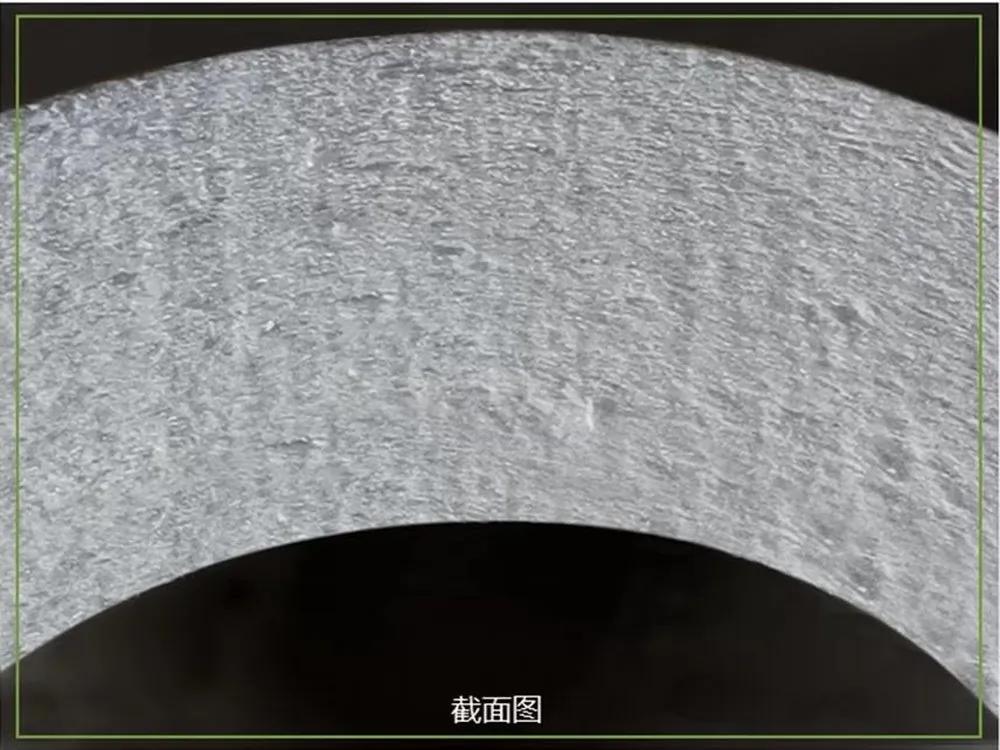
High temperature filter media comes in several physical forms. High temperature filter paper and high temperature filter cloth are cellulose or woven textile media and fail well below 260°C; fiberglass and PTFE-membrane media stretch that limit only slightly. When engineers compare high temperature filter material options above 260°C, a ceramic fiber cartridge is the practical answer: the ceramic filter media forms a rigid tube wall, so no pleated paper or fabric is involved. The same applies to a high temperature air filter media setup on hot process air — a ceramic element handles 600°C continuously. The high temperature filter housing (the vessel) is then sized around the tube bundle, and because the media tolerates the gas temperature, no cooling section is needed before the vessel. High temp filter media of this kind is not washed like textiles, and high temp filter housing design follows the same tube-bundle layout. As for how to clean filter media at these temperatures: textile media is washed or replaced, while ceramic fiber media is cleaned in place by pulse-jet back-blowing.
 English
  Deutsch
  简体中文
简体中文  한국어
한국어  日本語
日本語  Español
  Français
  Italiano
  Türkçe
  Tiếng Việt
  Português
  हिन्दी
  العربية
  Polski
  繁體中文
繁體中文