
A cement kiln filter is asked to do an unreasonable thing: take gas that is simultaneously hot, loaded with abrasive alkaline dust and subject to temperature swings nobody designs on purpose, and hold it below modern particulate limits through every upset, every kiln trip and every change of alternative fuel blend. Fabric cannot do it above roughly 260°C, and electrostatic precipitators drift their efficiency exactly when the kiln is least stable, which is during startup. A rigid ceramic candle removes both constraints. This article covers what the kiln tail and cooler actually deliver, why the conventional choices struggle there, what a 2019 retrofit on a 2,500 t/d clinker line has been running ever since, and how to scope a retrofit without discovering halfway through that the fan cannot carry it.
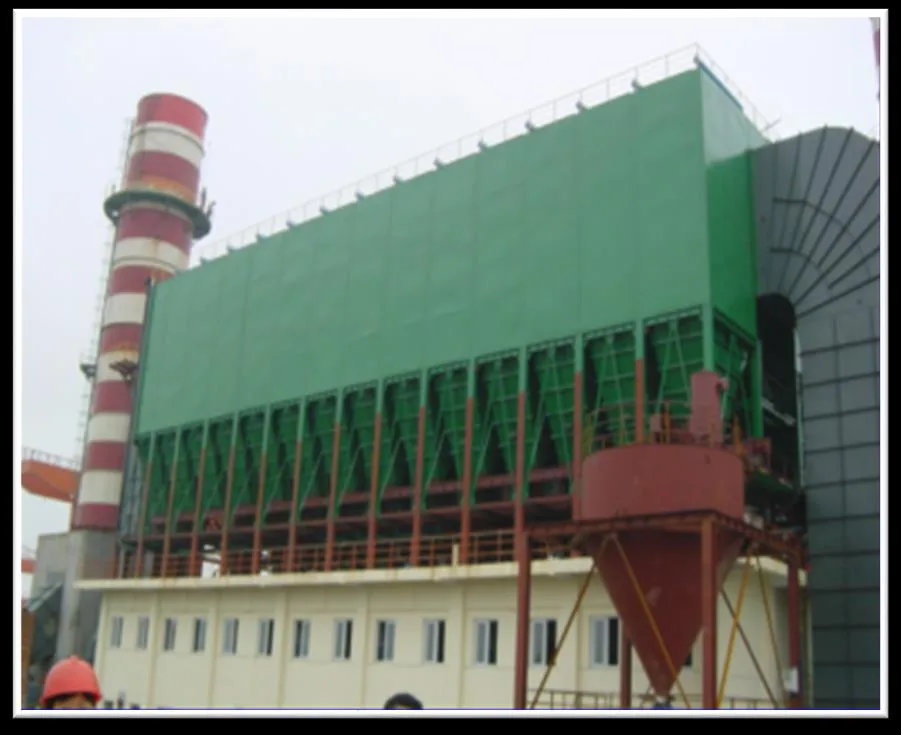
What actually reaches the tail-end filter
“Kiln tail” covers two quite different duties, and the distinction belongs on page one of the enquiry. Preheater or kiln-inlet gas carries raw meal dust with the chemical signature of the raw mix — calcined limestone, silica, alumina, iron oxide — at concentrations that can be enormous before any pre-separation. Grate cooler exhaust carries coarser, harder, freshly made clinker dust at lower loading and lower temperature. Many plants combine them.
Loading and temperature are set by the process, not by the permit
On a suspension preheater line with the raw mill in operation, most of the kiln dust is captured in the mill, and the tail filter sees a relatively light duty. Take the mill offline for maintenance and the whole burden arrives at the filter instead. Some lines deliberately filter hot gas at high temperature so that the cleaned stream can go to a waste-heat recovery boiler or a drying circuit, which raises the temperature considerably and removes any possibility of using fabric.
Nothing about a kiln is steady
Kiln trips, coating drops, burner adjustments, feed interruptions and alternative fuel switchovers all produce temperature excursions. A modern plant firing tyres, refuse-derived fuel or sewage sludge adds chlorine and sulphur to a circulation that was already cycling alkali internally, so both dust resistivity and dew point move around. Whatever you install has to tolerate being wrong-footed by the kiln several times a year, and it has to do so without catastrophic damage.
Where bags and ESPs reach their limit
Glass-fibre fabric will survive in the 260–280°C band with suitable treatment, which means anything hotter has to be conditioned first — usually a water spray tower or dilution air. Both add gas volume, both move the operating point towards the dew point, and the water route puts an evaporative load on a fan that is already the plant’s largest parasitic draw. Abrasion then takes its toll: raw meal and clinker dust are hard, and bag life in this service is measured in a few years, sometimes fewer.
Electrostatic precipitation avoids the temperature problem but replaces it with a resistivity problem. Dry raw meal dust at kiln temperature is highly resistive, so efficiency depends on conditioning the gas to change that property, and the outcome is sensitive to moisture, alkali content and the presence of unburnt carbon from alternative fuels. The practical consequence is familiar to every cement operator: the precipitator performs well at steady load and performs worst during startup and upset, precisely when visible emissions attract attention.
A ceramic element has neither failure mode. Efficiency does not depend on electrical properties, and temperature up to 600°C continuous, with short excursions to 1000°C, is not a reason to cool anything down. The economic operating window is 400–1000°C. Standard elements measure φ150 × φ110 × 3,000 mm with a 20 mm wall and porosity >83%, built to OD ±2 mm and length ±20 mm, and a clean element sits at 350 Pa at 1 m/min face velocity. Detailed media behaviour and the surface filtration mechanism are described on our filtration principle page.
Reference case: Shandong, 2,500 t/d clinker line, retrofitted in 2019
In 2019 a 2,500 t/d cement clinker line in Shandong replaced its glass-fibre bags with 120 ceramic filter elements. The plant runs the unit hot — continuously at around 850°C — and cycles it repeatedly between roughly 400°C and 850°C. Four years of operation later, the line holds below 3 mg/Nm³, and the elements have needed no equivalent of the bag changes the previous arrangement required.
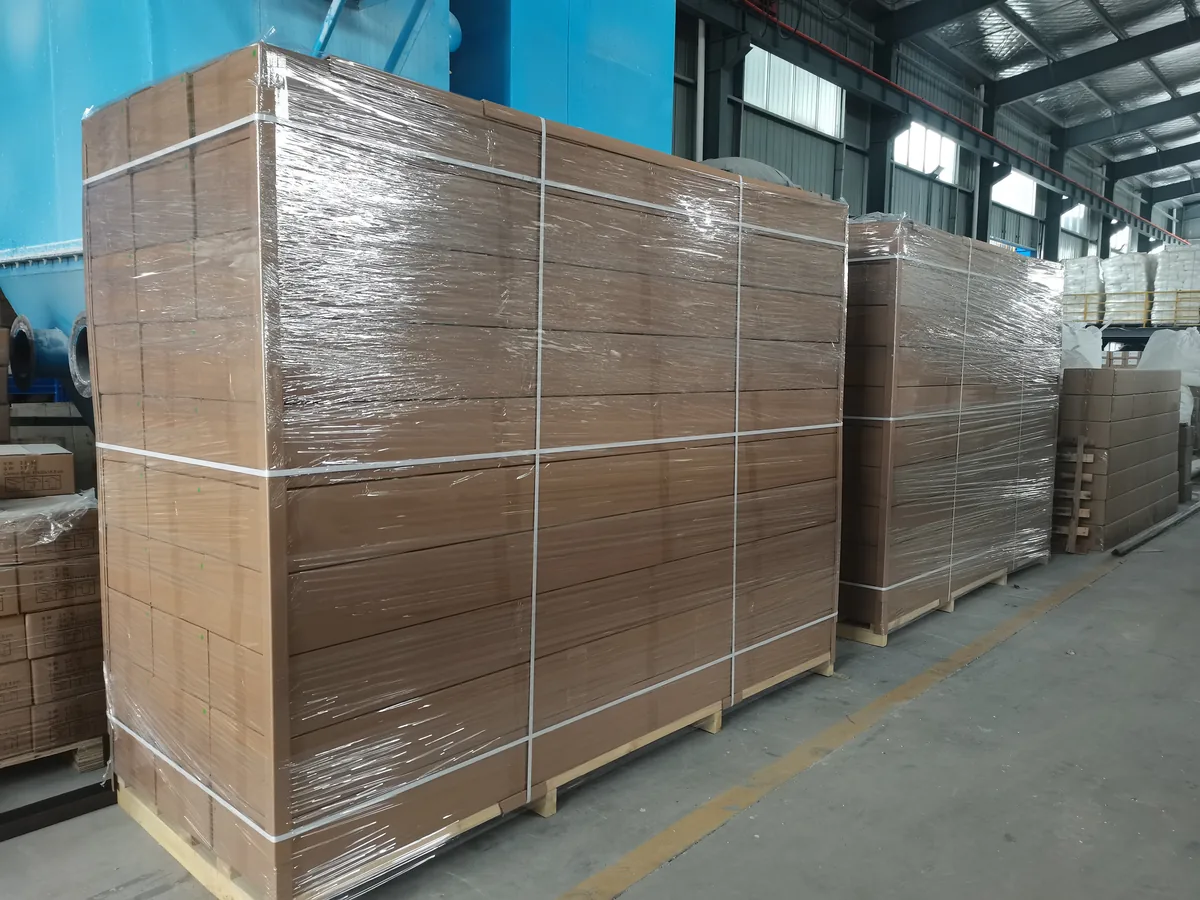
Two things make that case worth quoting. The first is the temperature: 850°C filtration means the clean gas still carries usable heat, which changes the economics of whatever sits downstream. The second is the cycling. Repeated 400 to 850°C swings are far more punishing than steady operation, because every excursion is an expansion problem for anything that is not monolithic in behaviour.
Temperature excursions faster than 200°C/min need protection, and so does any process that can deliver them. On the Shandong retrofit the cycling is managed within our allowable ramp rates; where it cannot be, the answer is a fast-acting bypass damper, staged heating or emergency dilution — designed in at the start rather than added after the first thermal shock.
Retrofit scope: what you keep and what you replace
Most cement plants assume a ceramic conversion means a new vessel. It usually does not, and knowing which parts stay is what makes the budget work.
| Component | Typical outcome in a retrofit | What has to be checked |
|---|---|---|
| Vessel casing and hoppers | Normally reused | Hopper discharge must handle dust that flows differently from baghouse fines |
| Pulse piping and valves | Usually reused if pressure can be held | Header must recover above 0.4 MPa between rows across a full sequence |
| Tube sheet | Replaced | Different fixing geometry and tolerance absorption than a bag collar |
| Elements and hold-down hardware | Replaced | Spring-loaded clamps to absorb OD ±2 mm and length ±20 mm |
| Insulation and cold-face protection | Upgraded on hot duties | Shell temperature rating and personnel protection at higher gas temperature |
| Induced-draught fan | Often reused, sometimes upgraded | Must carry 900–1,500 Pa system resistance, not the old fabric figure |
Sizing and operating a cement kiln filter
Element count comes from face velocity, not from the old bag count. Design at or below 1.5 m/min, which is; a standard φ150 × φ110 × 3,000 mm element offers about 1.41 m² of external surface, so it handles up to about 2.12 m³/min at the catalog maximum; allow additional margin for sticky or high-loading dust.
- Pre-separation. On high-loading kiln tail gas, or when the raw mill is bypassed, install a cyclone or inertial drop-out stage upstream so the filter is not asked to handle the entire burden. It also protects against coarse hot material.
- Cleaning. Pulse at 0.35–0.55 MPa for 0.1–0.15 s, triggered on differential pressure. Free lime in raw meal dust is alkaline and abrasive, so clean simply rather than often; over-pulsing shortens the campaign without lowering differential.
- Thermal discipline. Keep ramp rates below the 200°C/min threshold. Preheat the vessel before introducing kiln gas, avoid water spray onto elements, and interlock the bypass damper so a kiln trip does not impose a fast thermal step.
- Chemistry checks. Confirm free HF below 5 ppm, confirm there is no phosphoric acid mist, and note that although raw meal dust is itself alkaline, heavy alkali loading without sufficient sorbent still needs reviewing. Keep moisture below 20 vol%.
- Dust return. Captured kiln dust is process material. Plan to return it to the kiln feed or the cement mill, which turns the filter from a disposal cost into a material recovery point.
- Warranty and life. Elements are supplied for more than 5 years of service with a 5-year written warranty, and measured performance data is available for the efficiency and differential figures quoted here.
Most lines running particulate-only duty specify our non-catalytic ceramic fiber filter, with NOx handled by SNCR upstream as it normally is on cement. Where a plant does want DeNOx across the element, be aware that the catalytic window is 170–300°C with an optimum at 220–260°C, so a vessel intended to run at kiln-tail temperature is the wrong place for it — talk to us about where in your gas path that belongs before committing to a layout.
Frequently asked questions
Can ceramic elements run directly on 850°C kiln gas?
Yes. The Shandong retrofit has run continuously around 850°C since 2019, and the elements themselves are rated for 600°C continuous with excursions to 1000°C. What governs life on such duty is the rate of change, not the absolute temperature.
Why is 200°C/min treated as a hard limit?
Because rapid change induces differential expansion that brittle media does not absorb. Below that rate a ceramic element is comfortable through thousands of cycles. Above it you need engineered protection: a fast bypass, staged heating or emergency dilution designed in from the start.
Do we have to replace the whole baghouse?
Rarely. Casing, hoppers and pulse piping normally stay; the tube sheet, elements and hold-down hardware are replaced. The recurring surprise is the fan — check it can deliver 900–1,500 Pa of system resistance rather than the lower figure your fabric arrangement used.
What outlet level can we expect on kiln tail duty?
Collection efficiency holds at >99.99% independent of dust resistivity, and single-digit mg/Nm³ readings are normal. The Shandong line has been reported below 3 mg/Nm³ for more than four years, though your own figure depends on loading, air-to-cloth and whether pre-separation is installed.
What do you need in order to quote a cement kiln filter?
Gas volume at temperature, minimum and maximum operating temperature plus typical ramp rate, inlet dust loading with the raw mill both in and out of circuit, gas composition including moisture, your outlet limit, and whether the dust will be returned to the kiln or to the cement mill. The full range we build from is listed under ceramic filter products.
Send us your kiln capacity, tail gas data and existing filter arrangement, and we will tell you which parts survive the conversion and what element count the duty actually needs. Request a cement kiln retrofit review.
 English
 Deutsch
 简体中文
 한국어
 日本語
 Español
 Français
 Italiano
 Türkçe
 Tiếng Việt
 Português
 हिन्दी
 العربية
 Polski
 繁體中文